Nov 1, 2026Chain Operations
Sushi Ginger Dishes and the Garnish Layer
The ginger dish is the palate-cleanser's stage. The small-plate system between sushi courses: leaf shapes, the wasabi's seat and the garnish layer's count.

The sushi table's garnish layer — the ginger dish, the wasabi seat, the soy dish — is small ware with a precise job: it stages the palate-cleansers and the seasonings that make sushi dining work. The pieces are tiny, numerous, and wash in swarms. The garnish layer's program is the sushi format's smallest fleet and its busiest.
The Ginger Dish's Job
Pickled ginger is the palate's reset button between pieces — and its dish has one job: hold a small mound of pink slices, drained, visible, and easy to pinch from. The specs: a shallow dish with a slight well (the ginger's vinegar pool drains to the back), a size matched to the portion (a two-bite mound, not a salad), and a surface that shows the pink (white and pale glazes flatter it — the garnish layer's color rule repeats). The dish's read: fresh ginger on a clean stage.
The Wasabi Seat
Wasabi sits in its own small vessel or dabs directly onto the dish: the seat's options — the tiny divided corner of the ginger dish (the compact standard), the dedicated wasabi dish (the separate tier), and the leaf presentation (the real shiso leaf as the vessel — the traditional's theater). The seat's discipline: the wasabi's exposure managed (it dries and darkens in open air — the small vessel that covers or the timing that plates fresh), and the quantity's read (a pearl, not a puddle).
The Layer's Count
The garnish layer multiplies per cover: the ginger dish, the soy dish, the wasabi seat, the garnish leaf — three to five small pieces per setting before the sushi arrives. The count's discipline: the fleet math (covers × pieces per setting × the wash turnaround — the multiplication that small ware always brings), the containment in the dish room (the swarm's racks), and the count rhythm (the layer counted like cutlery — the walk factor is the highest in the fleet).
The Shape Family
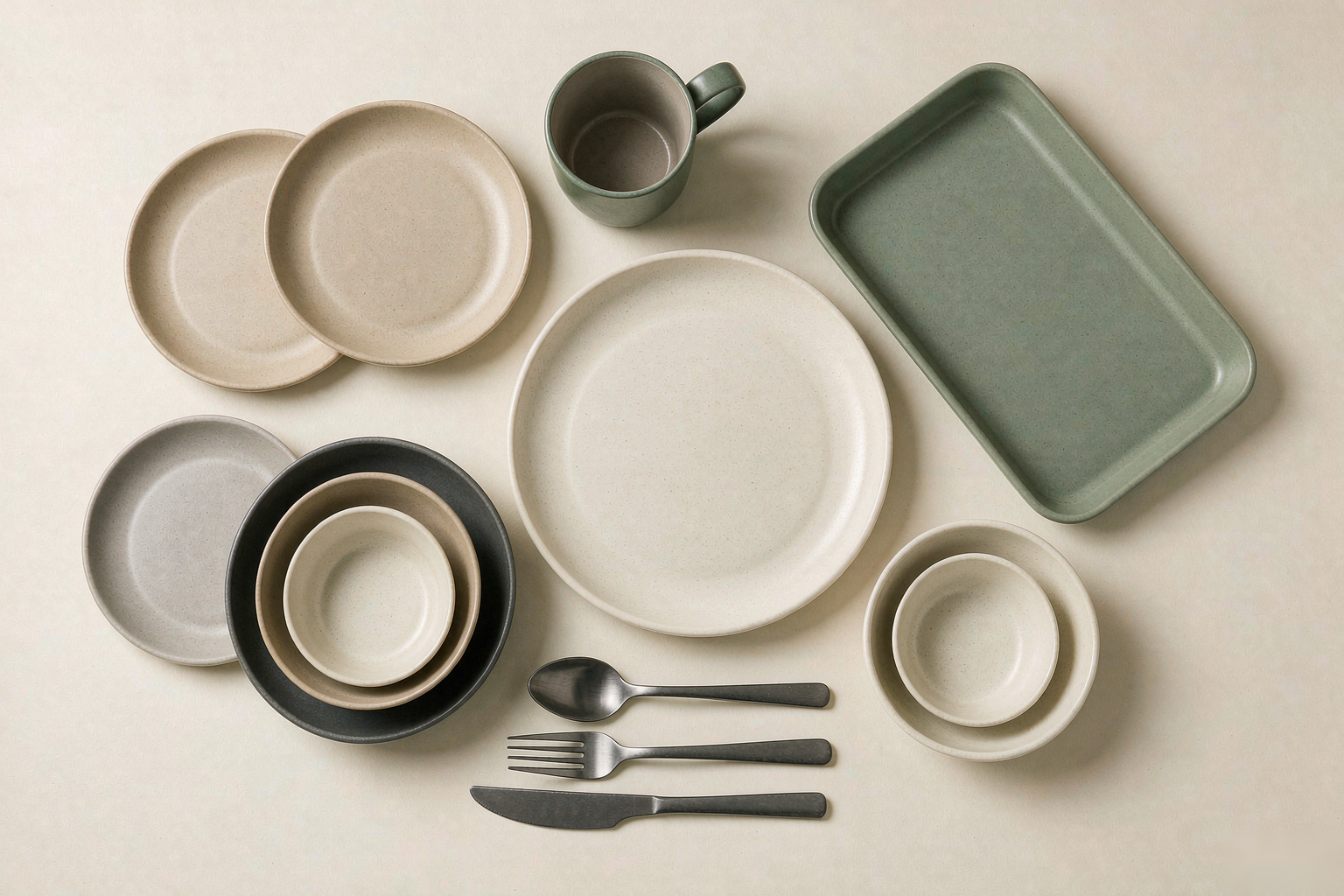
The garnish dishes come in a family of shapes: the round minis, the rectangle strips (for the elongated garnishes), the leaf forms (the organic's nod), and the divided trays (the all-in-one: ginger, wasabi, soy in one vessel). The family's discipline: matched feet and material (the layer stacks and shelves as a unit), two or three shapes max (the shape zoo's law applies at small scale too), and the color story (the layer that families with the sushi plates — the garnish's stage doesn't compete with the fish).
The Divided Tray Question
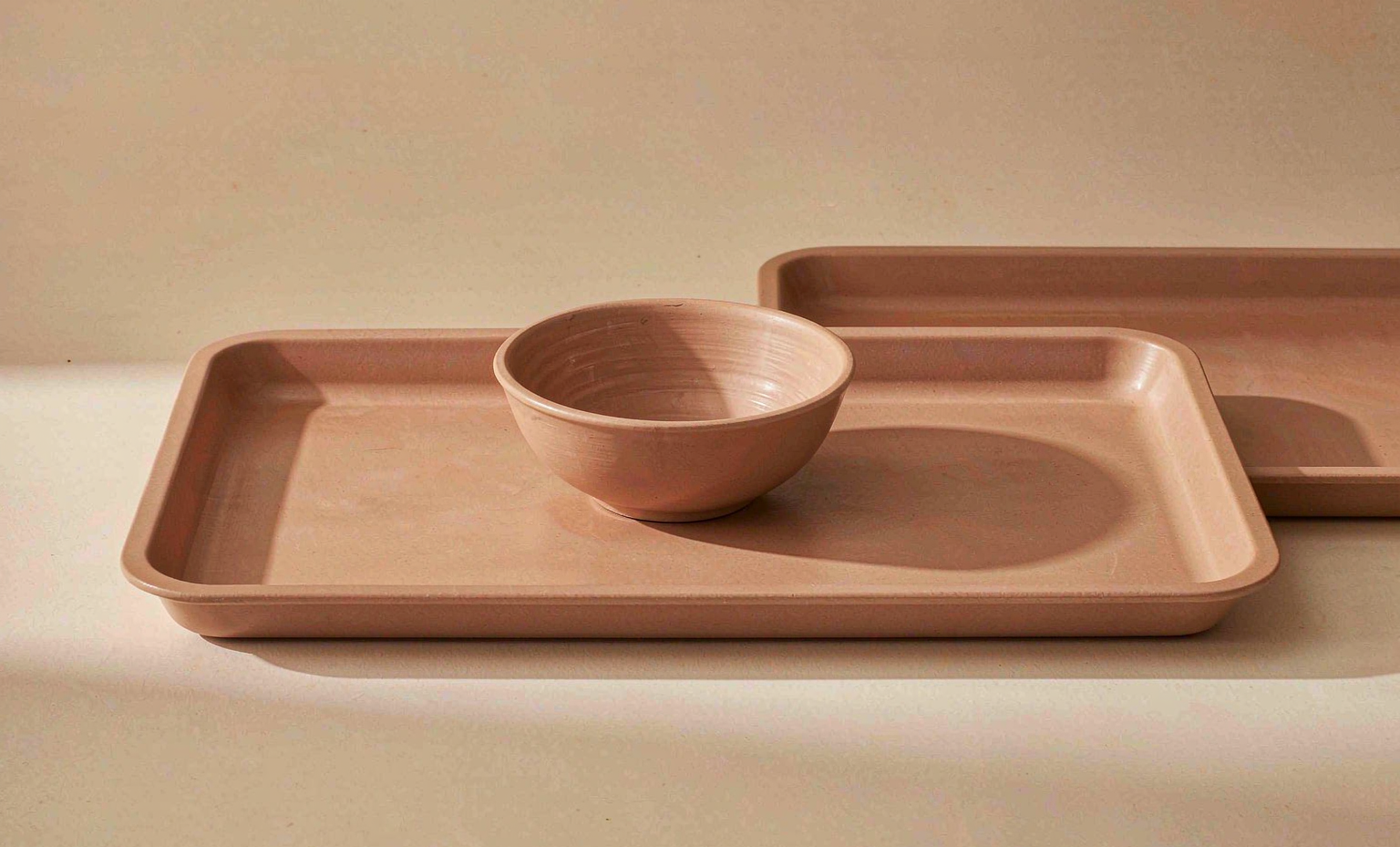
The divided tray — ginger, wasabi, and soy in one vessel — trades flexibility for efficiency: one piece to set, one piece to wash, one piece to count. Its costs: the fixed proportions (the heavy ginger user refills the whole tray), the soy's pool beside the dry garnishes (the wet-dry boundary), and the wash's care (the divided corners that hold soil). The program's decision: divided trays for the conveyor and volume formats, separate dishes for the counter and omakase tiers.
The Wash Reality
The garnish layer's wash is the sushi dish room's confetti: the containment racks (the small-ware law's strictest application), the sort protocol (the layer's pieces sorted by shape at the return), and the chip audit (the tiny rims chip invisibly — the light test at the pit). The wash's economics: the layer's pieces wash every seating — the containment's quality is the dish room's throughput.
The Conveyor's Layer
Kaiten sushi runs the garnish layer differently: the pieces ride the rails with the plates — the ginger dish docked beside the sushi plate, the soy dish fixed at the seat. The conveyor's discipline: the rail's footprint (the layer's pieces sized to the belt's width), the dock's design (the pieces that seat without sliding), and the count at the belt's end (the rail returns everything — the layer's inventory rides the loop). The conveyor's layer is the garnish program at its most systematic.
The Freshness Signal
The garnish layer is the guest's freshness thermometer: the ginger's sheen (the glossy pink of the fresh pack versus the dull brown of the tired one), the wasabi's color (the vivid green that fades in open air), and the dish's cleanliness (the vinegar pool dried to a film — the layer's neglect is visible). The signal's discipline: the layer refreshed with the same rhythm as the fish — the garnish's condition is audited at the same cadence. The freshness signal is the layer's real job: the small pieces carry the big read.
Frequently Asked Questions
What size ginger dish is right? A two-bite mound's stage: shallow, slight well for the vinegar pool, pale glaze to flatter the pink. The garnish is a palate cleanser, not a salad.
Divided trays or separate dishes? Divided for volume and conveyor formats (one piece to set and wash), separate for counter and omakase tiers (flexibility for the heavy ginger user). The format decides.
Why does the garnish layer walk so much? The pieces are tiny, dense, and giftable — the shrinkage law's favorite. Count like cutlery, buy dense and unbranded, carry the loss factor.
How do you keep wasabi presentable? Small vessels that cover or fresh plating per order: wasabi dries and darkens in open air. A pearl on a clean seat, refreshed with the fish's rhythm.
What is the layer's freshness signal? The guest reads freshness in the garnish: the ginger's sheen, the wasabi's color, the dish's film-free cleanliness. Refresh the layer on the fish's cadence — the small pieces carry the big read.