Sep 29, 2026Material & Compliance
Why Chain Tableware Fails Early: Five Failure Modes and the Specs That Prevent Them
Chipping rims, warped melamine, faded logos — most chain tableware failures trace back to five specification gaps. A buyer's field guide to what breaks and which spec lines prevent it.
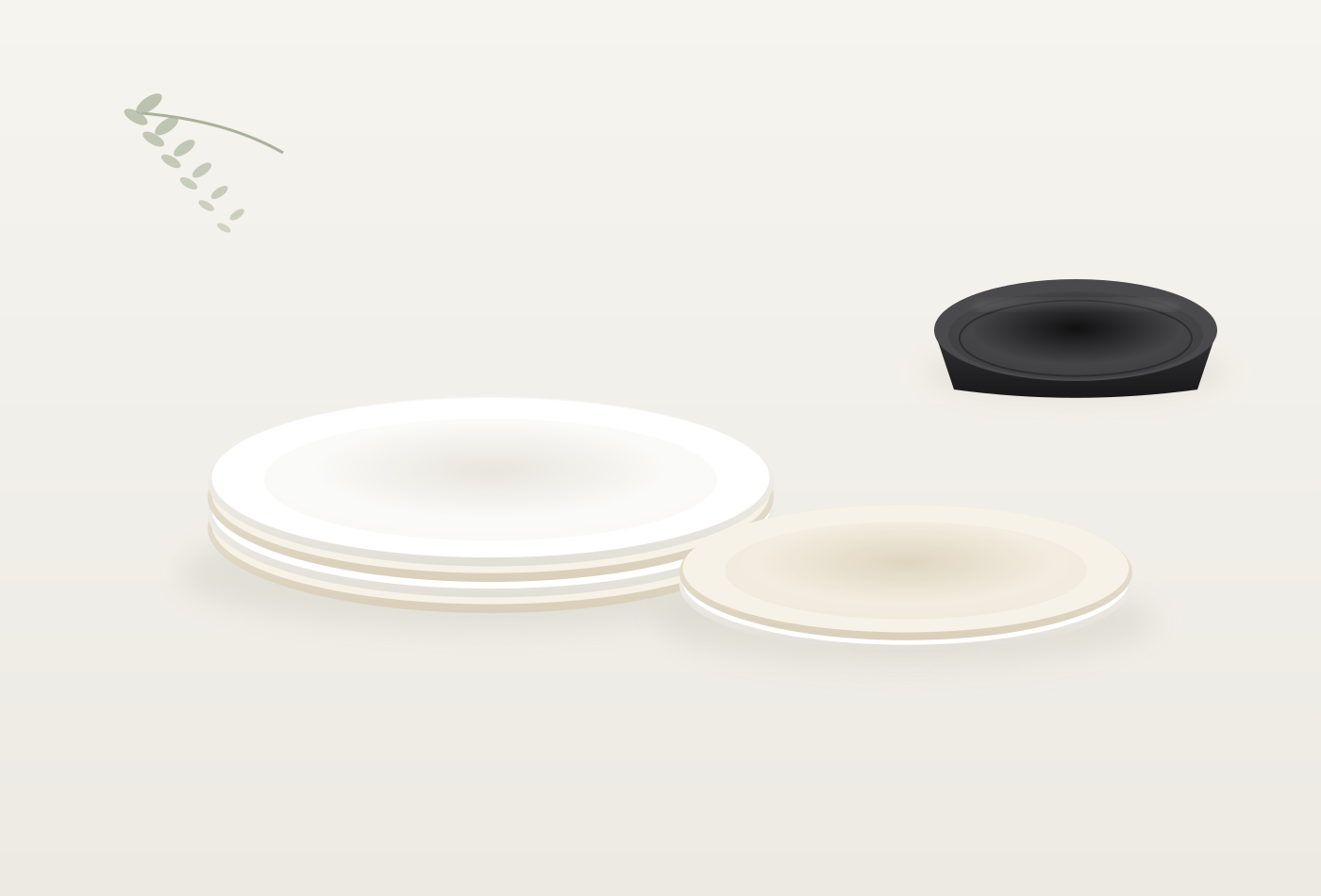
Chain tableware rarely fails on looks. Catalog samples arrive beautiful, the first store run goes well — and then, a few months into multi-store service, the same items start coming back: chipped rims, warped bowls, logos that have faded to a ghost. Almost every one of these failures traces back not to bad luck, but to a specification gap that was visible before the first order was placed.
Here are the five failure modes we see most often in chain programs, and the specification line that prevents each one.
1. Rim chipping on ceramic plates
Ceramic almost never chips in the middle of the plate. It chips at the rim — where plates strike each other when stacked, where trays slide, where dish racks clamp. A profile that looks elegant in a showroom can be structurally fragile in a stack of forty.
The prevention is a rim and foot specification: a reinforced rim profile, a foot ring wide enough to carry stacking loads, and a wall thickness chosen for service rather than for the photo. Ask a supplier to state the rim profile and stacking design explicitly — if the answer is a mood board, that is the answer.
2. Heat deformation of melamine
Melamine is a thermoset plastic: excellent for high-volume service at normal serving temperatures, and unforgiving when it meets heat it was never designed for. Oven use, heat lamps and hot-holding well above the material's rated temperature envelope slowly deform panels and bowls — and melamine tableware is not intended for microwave use.
The prevention is a written temperature envelope per item: what it is rated for (serving, dishwashing) and what it must never touch (ovens, heat lamps, microwaves). A supplier who states the envelope in the spec sheet is a supplier who has thought about your kitchen; one who only says "restaurant grade" has not.
3. Glaze wear and scratch haze
On ceramic, the second most common complaint is a dull, scratched haze that appears months in — the visible result of stacking abrasion and dishwasher chemistry working on a glaze that was never specified for commercial duty.
The prevention is a glaze specification, not a color sample: surface hardness and abrasion resistance rated for commercial dishwashing, and decoration kept out of the main wear path. A color-only approval is how this failure gets approved in advance.
4. Stainless corrosion at welds and edges
Stainless does not rust evenly — it rusts where the process damaged it: unpolished weld seams, cut edges, areas where the grade or finish was allowed to drift between batches. Cutlery and specialty tools add a hardness dimension: a 420 (3Cr13) martensitic stainless can be hardened to around HRC 52 for edge retention, but only if the grade actually arriving is the grade that was ordered.
The prevention is material traceability: steel grade stated per item, and verification per production batch — for example spectral analysis of incoming material, which is how batch-level grade drift gets caught before shipment instead of after complaints.
5. Logo and print fade
A chain logo is the most-washed surface on the plate. Surface prints applied over the glaze fade under commercial dishwasher chemistry; the failure shows up as a brand question, not a tableware question — which is why it is expensive.
The prevention is a decoration method specification: under-glaze laser marking for ceramics keeps the mark inside the wear surface rather than on top of it. Confirm the method in writing, and confirm it survives the same dishwasher cycle count you actually run.
The five spec lines to put in every RFQ
Rim and stacking design for ceramics; temperature envelope for melamine; glaze abrasion spec for glazed items; steel grade with per-batch verification for stainless; decoration method for branded items. Five lines — and they prevent the large majority of what actually sends chain tableware to early replacement.
None of this requires a laboratory. It requires a supplier who is willing to write these lines down before the order, and to show the records — incoming, mid-process and finished-goods testing, batch-linked — that say the written spec is the delivered spec. When a supplier offers that paperwork unasked, the failure modes above mostly stop happening.