
Chain Operations
Tableware Terminology Glossary: The Buyer's Dictionary
Vitrified. Bisque. Footring. AQL. The words suppliers use and buyers should own — a working dictionary for reading catalogs, specs and lab reports without guessing.
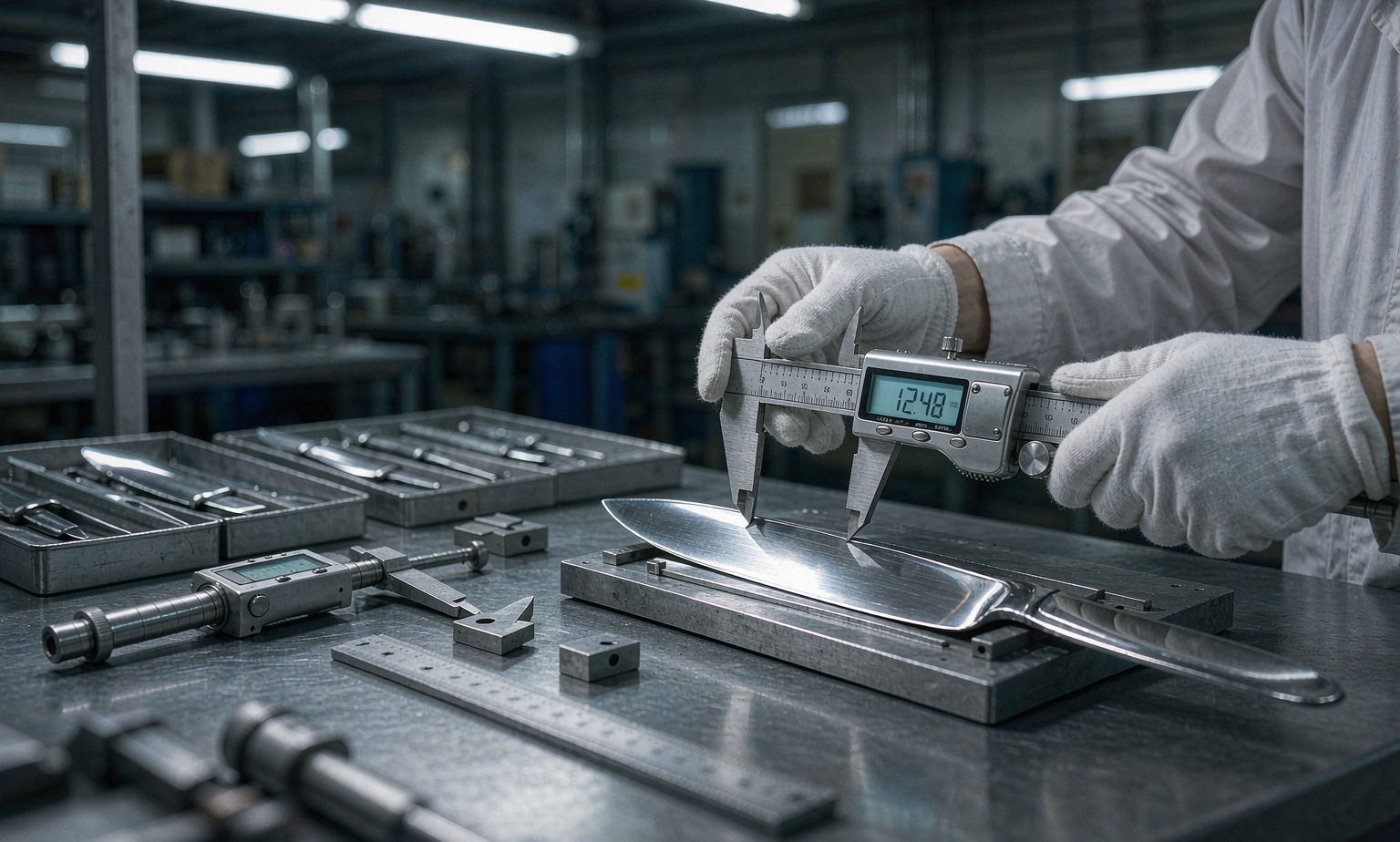
Every specification conversation runs on vocabulary, and the buyer who half-knows the words negotiates at half-strength. Suppliers are not gatekeeping on purpose — the terms are simply their working language, and the buyer's fluency decides whether the conversation reaches the real questions.
This glossary is the working set: the terms a tableware buyer meets in catalogs, spec sheets and lab reports, defined in buying language rather than ceramics-engineering language.
The Body
Body. The fired clay material itself — everything beneath the glaze. Body composition (our body comparison guide) decides strength, absorption and thermal behavior.
Vitrified. Fired to near-zero porosity — the glass-like, non-absorbent state of quality porcelain. Vitrification is why plates resist staining; under-fired bodies are porous and stain-prone.
Bisque. The first-fired, unglazed state — porous, hard enough to handle and glaze. Bisque firing is stage one of the two-fire cycle (our kiln guide).
Stoneware / porcelain / bone china. The three commercial body families — the trade-offs mapped in our body comparison guide.
Alumina-reinforced. Body toughness from added alumina particles — the hotel-china standard (our reinforcement guide).
Absorption rate. How much water the fired body takes in — the measured number that predicts staining and frost behavior. Ask for it by test.
Crazing. The fine crack network in glaze (body unaffected) — the fit failure our crazing guide explains.
The Glaze
Glaze. The glass layer fused onto the body — the surface that takes all the wear.
Underglaze / overglaze. Decoration beneath the glaze layer (protected, durable) versus above it (finer detail, softer surface) — the durability fork our decoration notes cover.
Reactive glaze. A glaze formulated for variegated, organic visual effects — beautiful, and batch-variable by nature.
Matte / satin / gloss. Finish families by reflection level — measurable in gloss units (our gloss guide).
Crazing / shivering / peeling. The three glaze-fit failures: tension cracks (crazing), compression flaking (shivering), outright lifting (peeling).
The Flatware
18/0, 18/8, 18/10. Chromium/nickel content in stainless — the corrosion-and-luster ladder (our flatware guide).
Gauge. Metal thickness — the bend-resistance variable at tines and knife necks.
Forged vs stamped. Shaped from a single heated bar versus cut from sheet — construction tiers with balance and strength differences.
Tang. The steel continuing into the handle — full tang is the strength standard.
Bolster. The thickened blade-handle junction on forged knives.
PVD. Physical vapor deposition — the durable modern film technology behind gold and black accent finishes.
The Process
First article (FAI). The pre-production sample verification — where programs are won (our FAI checklist).
AQL. Acceptance Quality Limit — the sampling tolerance standard for lot inspection (our sampling guide).
Witness ware. Test pieces placed through a kiln load to verify what the load experienced.
Delta E (ΔE). The colorimetric distance number — the tolerance language of color programs.
Gloss units (GU). The specular-reflection measure — finish tolerances in numbers.
Tolerance. The agreed variation band on any dimension — ceramics shrink; tolerances make the shrinkage negotiable.
The Fleet
Par level. The piece count that keeps the loop running — computed, not guessed (our par guide).
FIFO. First-in-first-out — the rotation discipline that is a floor plan, not a poster.
Buffer / reserve. The loss-and-lead-time stock layers above the cycle par.
Generation. A fleet's production vintage — coherent generations read well; mixed ones read as neglect.
Retirement standard. The sealed reference that defines when pieces leave guest service.
Footring. The bottom ring that carries the piece — and grinds its stack-mates if unspecified.
The Documents
Spec sheet. The piece's contract — field by field (our anatomy guide).
Defect sheet. The photographed, classified list of what counts as critical/major/minor — AQL's working vocabulary.
Batch record. The lot-tied production evidence — firing, tests, position (our kiln and audit guides).
Corrective action. The structured response to a failure — root cause, evidence, closure (the scorecard discipline).
Using the Dictionary
Fluency is not vocabulary recall — it is asking the next question. "Vitrified?" leads to "what is the measured absorption?" "Batch-tied?" leads to "retrieve lot 2026-08 for me." The dictionary's purpose is to move conversations from reassurance to data — one term, one follow-up, at a time.
Frequently Asked Questions
Do suppliers respect buyers who use the vocabulary? They recalibrate — the buyer who asks follow-up questions in the trade's language gets specification answers instead of sales answers. That recalibration is the point.
Which terms matter most at first contact with a supplier? Absorption, batch-tied records, first article, AQL — the four that sort serious suppliers from catalog sellers fastest.
Is there a standard dictionary to reference? The terms are industry conventions more than formal standards — this glossary's definitions match working trade usage.
How do I keep learning past the glossary? Read every lab report and spec sheet that crosses your desk against these definitions — the vocabulary sets, the fluency comes from use.
What term do buyers misuse most? "Porcelain" as a quality claim rather than a body family — the word describes material, not grade; the grade lives in the measured properties.


