Nov 1, 2026Material & Compliance
Stoneware Mugs vs Porcelain Mugs: The Mug Body Decision
Two mugs, two lifetimes. The comparison: stoneware's thermal mass and rustic look vs porcelain's lightness and precision — the body per concept and per dish machine.
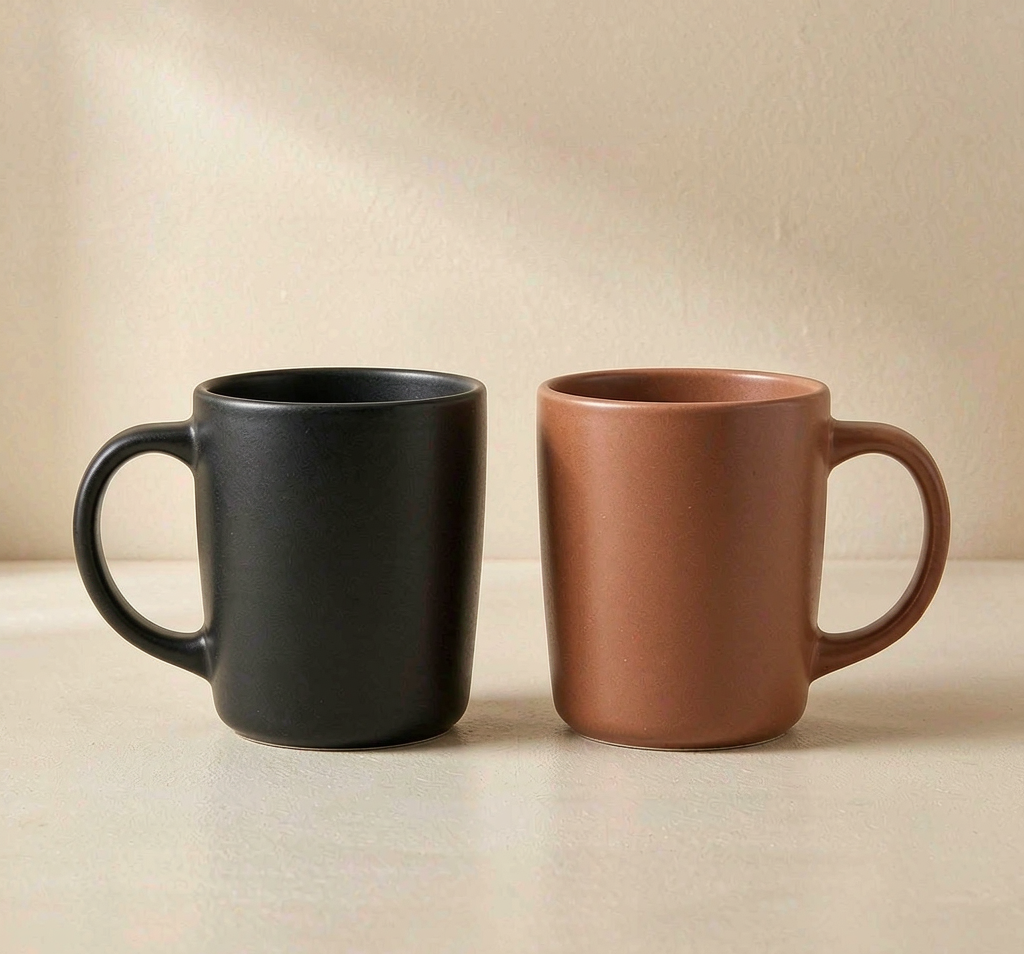
Two mugs, two lifetimes: the stoneware's thick walls hold the coffee's heat and the artisanal's look; the porcelain's thin walls read the fine-dining's precision. The mug body decision is the coffee program's foundational fork — thermal mass against lightness, rustic against precise, and the dish machine's verdict on both. This guide compares the bodies.
The Thermal Mass Story
The body's weight is the coffee's temperature: the thermal mass story — the stoneware's thick walls (the heat's reservoir: the coffee stays hot through the long sit), the porcelain's thin walls (the elegant's speed: the coffee cools faster but the cup warms in the hand), and the format's match (the diner's stoneware heat, the café's porcelain presentation). The story's discipline: the thermal's test (the coffee's temperature at the ten-minute mark: the bodies' contrast), and the format's honesty (the concept's pace: the drink-it-fast versus the sit-with-it). The thermal mass story is the mug's first physics: the body's mass is the coffee's clock.
The Weight in the Hand
The mug's weight is the guest's read: the weight in the hand — the stoneware's heft (the craft's signal: the mug that means it), the porcelain's lightness (the refinement's read: the cup that floats), and the balance's subtlety (the handle's position, the base's spread: the mug's engineering). The weight's discipline: the weight specified per concept (the grams in the spec: the hand's honest instrument), and the fleet's consistency (the weight's tolerance across the batch: the drift's read). The weight in the hand is the mug's tactile brand: the guest lifts and reads the restaurant.
The Glaze's Canvas
Each body takes glaze differently: the glaze's canvas — the stoneware's matte and reactive (the texture's depth: the artisanal's tier), the porcelain's gloss and precision (the clean's clarity: the pattern's fine lines), and the color's behavior (the body's influence on the glaze's tone: the clay's color beneath). The canvas's discipline: the glaze tested per body (the same glaze reads differently on stoneware and porcelain), and the look's consistency (the batch's variation: the body's contribution to the drift). The glaze's canvas is the mug's styling: the surface that carries the brand's color and the food's contrast.
The Dish Machine's Verdict
Both bodies wash, differently: the dish machine's verdict — the stoneware's mass (the rack's weight, the cycle's heat absorbed), the porcelain's edge (the thin rim's chip: the machine's casualty), and both's glaze (the chemistry's compatibility: the detergent's tier). The verdict's discipline: the maker's wash statement (the cycles' count: the fleet's care contract), and the fleet's attrition (the chip rates per body: the ledger's data). The dish machine's verdict is the mug's lifecycle: the body's survival in the machine.
The Handle's Engineering
The handle is the mug's engineering test: the handle's engineering — the stoneware's thick handle (the grip's comfort: the joint's strength), the porcelain's delicate handle (the elegant's line: the chip's vulnerability), and the handle's attachment (the joint's construction: the mug's fracture point). The engineering's discipline: the handle's pull test (the joint's strength: the fleet's sampling), and the handle's geometry (the fingers' fit: the grip's comfort across hand sizes). The handle's engineering is the mug's joint: the fracture point that the buyer tests before the guest does.
The Cost's Reality
The bodies price differently: the cost's reality — the stoneware's mid-tier (the body's cost: the artisanal look's accessibility), the porcelain's premium (the fine body's price: the quality's tier), and the fleet's math (the mug's cost per cover: the body's lifecycle arithmetic). The reality's discipline: the TCO per body (the purchase, the attrition, the wash: the mug's full cost), and the tier's placement (the stoneware for the volume's craft, the porcelain for the premium's precision). The cost's reality is the mug's economics: the body's price per thousand coffees.
Frequently Asked Questions
Which mug keeps coffee hotter? The stoneware's thermal mass: the thick walls' heat reservoir holds the coffee's temperature through the long sit. The porcelain's thin walls cool faster but warm in the hand.
Which body for a casual café? The stoneware's craft register: the heft that reads as quality, the matte glaze's texture, the durability in the busy machine — the casual's natural body.
Which body for fine dining? The porcelain's precision: the light cup's elegance, the thin rim's refinement, the glaze's clean clarity — the premium tier's natural body.
What breaks first on either? The handle's joint: the fracture point on both bodies — the pull test at sampling, and the fleet's attrition data confirming the weak point.
How does the buyer decide? The concept's pace, the menu's price, and the machine's reality: the stoneware for the diner's heat and the craft's look, the porcelain for the premium's light and the clean's clarity.