
Oct 28, 2026Chain Operations
Santoku vs Chef's Knife for Restaurant Prep Lines: Which Profile Belongs on Your Board
Santoku or chef's knife? Geometry, cutting motion, training cost, and board fit decide. How to build a mixed knife standard for chain kitchens across Asia and Mexico.
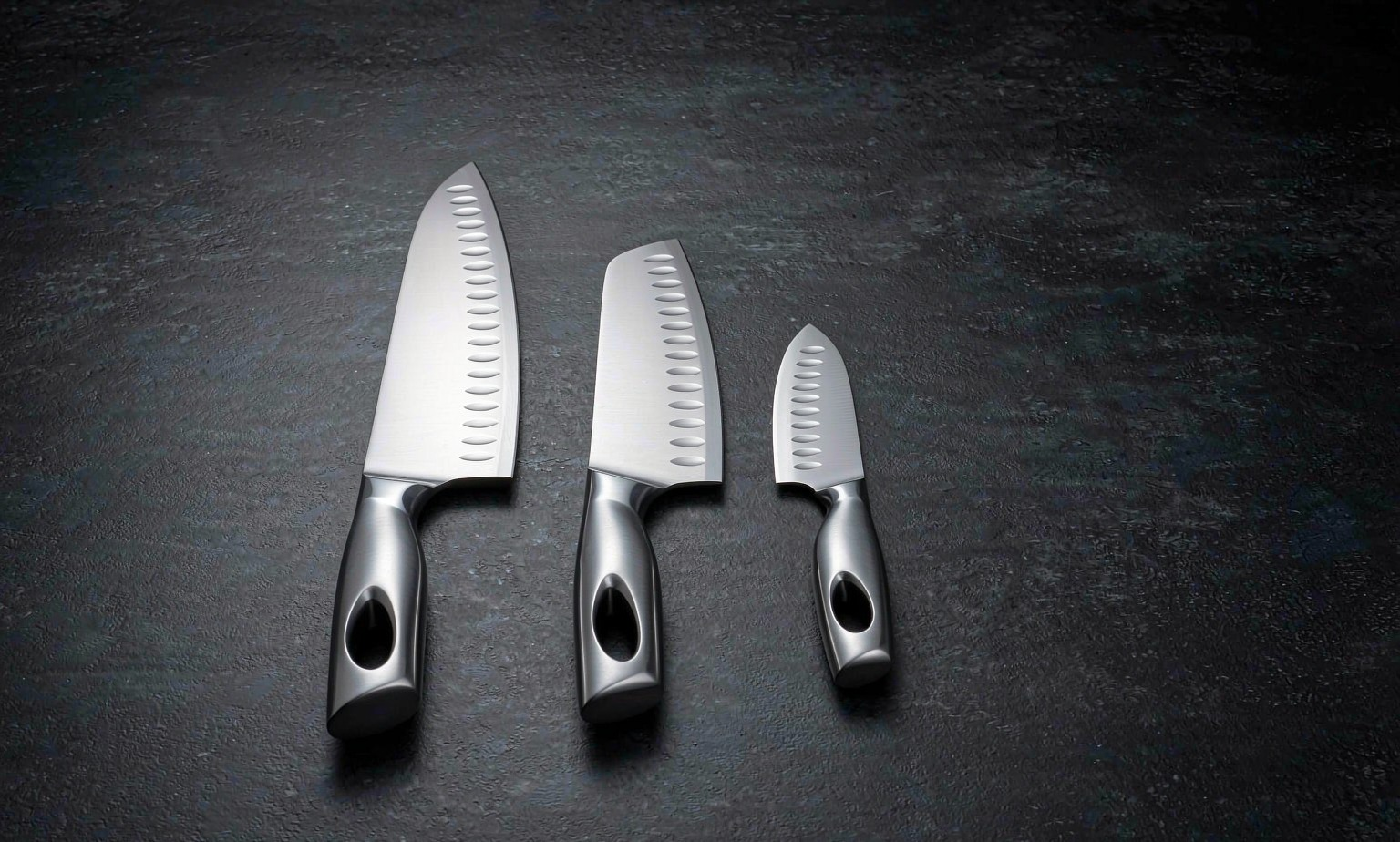
Santoku vs Chef's Knife: Which Profile Belongs on a Restaurant Prep Line?
On a busy prep line, the santoku vs chef's knife question is rarely philosophical. It is practical: which blade keeps the station moving when onions, herbs, proteins, and produce arrive in the same hour? The two profiles look similar on a wall magnet, but their geometry drives different cutting motions, different training curves, and different board requirements. For multi-unit chains buying for kitchens in Japan, Korea, Thailand, Vietnam, Malaysia, and Mexico, the answer is usually a mixed kit, not a single blade. This guide breaks down where each profile earns its place and how procurement teams can verify quality before a rollout.
The Geometry Gap: What Actually Separates the Two Profiles
Both knives are general-purpose tools built around different ideas. A Western chef's knife is typically 8 to 10 inches (200–250 mm) long, with a pronounced curved belly and a sharp, narrow tip. The curve supports rocking: the tip stays near the board while the heel rises and falls. The tip handles delicate cuts and tight work.
A santoku is usually about 7 inches (180 mm), with a flatter edge, a taller blade face, and a blunter tip. The flat section supports a full-length push cut or a straight downward chop. Many santoku blades also carry granton dimples to reduce sticking on wet produce. Neither profile is a downgrade. They solve different problems.
Feature | Chef's knife | Santoku |
|---|---|---|
Typical blade length | 8–10 in (200–250 mm) | About 7 in (180 mm) |
Edge profile | Pronounced curved belly | Flatter edge, gentle curve near tip |
Tip | Pointed, narrow | Blunter, lower point |
Blade height | Moderate | Taller face |
Natural motion | Rocking | Push cutting, chopping |
Strongest tasks | Herbs, portioning proteins, rocking | Dense vegetables, straight slices, dicing |
Learning curve | Steeper | Shallower |
Rock, Push, or Chop: How Blade Motion Changes Throughput
Motion is where the efficiency argument gets real. Rocking is fast when the task suits it: herbs, mushrooms, onions, and anything that benefits from a continuous curl of the blade. But rocking rewards rhythm and wrist control. A new cook who rocks tentatively moves slower than a cook who push-cuts with confidence.
Push cutting suits the santoku's flat edge: the blade enters at the heel and travels forward through the product, keeping full contact with the board. Chopping is a vertical motion, useful for dense items and for cooks who prefer two-handed control.
Throughput depends on the task mix, not the knife alone. A station prepping 20 kg of onions benefits from a consistent push-cut rhythm and a tall blade that keeps product contained. A garnish station may favor a rocking chef's knife.
Prep task | Best motion | Profile that fits | Why |
|---|---|---|---|
Herbs, garlic, mushrooms | Rock or quick chop | Chef's knife or santoku | Curved belly speeds rocking; tall santoku contains the chop |
Onions, peppers, tomatoes | Push cut | Santoku | Flat edge stays in contact for cleaner slices |
Dense roots, squash | Chop or push | Santoku or heavy chef's knife | Blade height and mass help |
Portioning proteins | Push or draw | Chef's knife | Longer blade and pointed tip |
Fine garnish | Tip work | Paring or utility | Control at the tip |
What Asian Menus Actually Ask of a Knife
Japan: a santoku is a common general-prep knife, but sashimi and sushi work calls for a long, straight, single-bevel yanagiba, and fish breakdown calls for a deba. A chef's knife can slice fish, but it is not a substitute for those purpose-built profiles.
China and Korea: Chinese kitchens rely on a slicing cleaver, a thinner vegetable slicer, and a bone chopper; the blade shapes and cutting mechanics differ from a Western chef's knife. Korean prep often uses a large, thin chef-style knife or a cleaver for vegetables and sliced meats.
Southeast Asia and Mexico: lemongrass, lime leaves, galangal, and herb bundles reward a sharp, flat edge and a stable tall blade. In Mexico, lime wedges, cilantro, onions, and salsas put a premium on fast push-cutting and easy cleaning. A single Western profile cannot optimize all of these menus.
Training Cost: Why Santoku Gets New Hires Productive Faster
Training cost is the hidden line item in a knife standard. A santoku is easier for a new hire to use well: the shorter blade is easier to control, the flat edge gives immediate feedback against the board, and the blunt tip reduces accidental tip damage during routine prep.
A chef's knife asks for more. The cook must learn to keep the tip down while rocking, avoid twisting the blade, and use the tip for precision. That skill is worth building in a kitchen with a stable, experienced team. In a chain with high turnover or a large seasonal intake, a santoku-first standard shortens the period before a new cook is productive. Pilot both profiles with the actual team for two weeks and track rework, cut quality, and sharpening frequency.
Board Size, Station Width, and the 7-Inch Reality
Knife length has to fit the station. A 7-inch santoku leaves more room on a standard 18 x 12 inch (455 x 305 mm) poly board and in a narrow prep slot. A 10-inch chef's knife can crowd the same station, pushing the handle over the board edge and forcing the cook into an awkward stance. Measure the usable board length, then allow clearance at the heel and tip.
Blade height matters too: a taller santoku gives knuckle clearance and keeps chopped product from spilling, while a long chef's knife may feel tip-heavy in a tight space. For central kitchens with wide boards and high volume, the extra reach of an 8- or 10-inch chef's knife can reduce repeated repositioning. Match the blade to the station, not to a catalog photo.
Building a Mixed Knife Kit for a Chain Kitchen
A chain kitchen rarely needs one knife for every cook. A three-tier kit covers most prep lines, and it is easier to enforce than an open knife block.
Role | Recommended profile | Starting allocation | Notes |
|---|---|---|---|
Primary prep | 7-inch santoku or 8-inch forged chef | 1 per prep station | Choose by menu mix |
Backup | Same as primary | 1 per three cooks per shift | Keeps the line running |
Fine work | Paring or utility | 2 per station | Garnish and trim |
Specialty | Yanagiba, deba, cleaver, boning | By menu | Do not substitute |
Our partner factories produce the Forged Chef Series in 8–10 inch full-tang construction with X50CrMoV15 at 56–58 HRC, alongside santoku and utility profiles in 5Cr15MoV. That range lets a buyer standardize handles and steel families without forcing one geometry onto every station. Browse the stainless specialty tools range.
How Procurement Should Verify Edge, Tip, and Belly Consistency
Before a rollout, verify the details that drive performance. Edge angle and edge geometry should be checked against the agreed specification; our partner factories hold a 0.02 mm edge tolerance and check hardness and edge geometry every two hours during production.
Tip strength deserves a separate look. A thin, over-polished tip chips in normal use, so inspect sample tips under magnification and test them against the products your cooks will cut. Belly curvature should be consistent from knife to knife; compare silhouettes or use a template. Check that the bolster-to-edge transition is clean and the handle rivets are flush and tight.
Ask for the inspection plan: 100% visual and function checks at shipment and AQL 1.0 are a reasonable baseline. Confirm first-pass yield and monthly capacity against your rollout schedule. Our supply network reports 120,000 pieces per month and 98.6% first-pass yield, but every purchase order still needs a written capacity commitment.
FAQ: Santoku vs Chef's Knife Questions from Chain Buyers
Is a santoku better than a chef's knife for restaurant prep?
Neither is universally better. A santoku is easier to learn and excels at push-cutting vegetables and dense prep. A chef's knife is more versatile for rocking herbs and portioning proteins. Most chains get the best result by matching the profile to the dominant menu and station.
Can a santoku replace a chef's knife?
For vegetable-heavy prep, often yes. It cannot replace a chef's knife for heavy rocking or a long slicing stroke, and it is not a substitute for a yanagiba on sashimi or a cleaver for bone work. Treat it as a primary prep blade, not a universal one.
What size santoku should a commercial kitchen buy?
Seven inches is the practical default for most prep stations. A 5.5-inch blade suits small boards and garnish work; a longer santoku can help high-volume vegetable prep if the board and station have room. Confirm handle clearance before ordering.
Which profile is easier to maintain?
A santoku's flatter edge is easier for inexperienced staff to keep consistent on a stone or sharpener. A chef's knife rewards proper technique because the curved belly needs a rolling stroke. Steel and heat treatment matter as much as profile; confirm hardness and edge geometry with the supplier.
Building a knife standard for a new chain location? Send your menu mix, station dimensions, and target rollout date through our contact page. Our team will map profiles to prep tasks and arrange samples from our partner factories before you commit to volume.

