
Oct 27, 2026Chain Operations
Kitchen Knife Steel Grades: 420J2 vs 5Cr15MoV vs X50CrMoV15 for Commercial Kitchens
420J2, 5Cr15MoV and X50CrMoV15 sit at three price tiers of kitchen knife steel. What the chemistry means for edge retention, corrosion, and cost in chain kitchens.
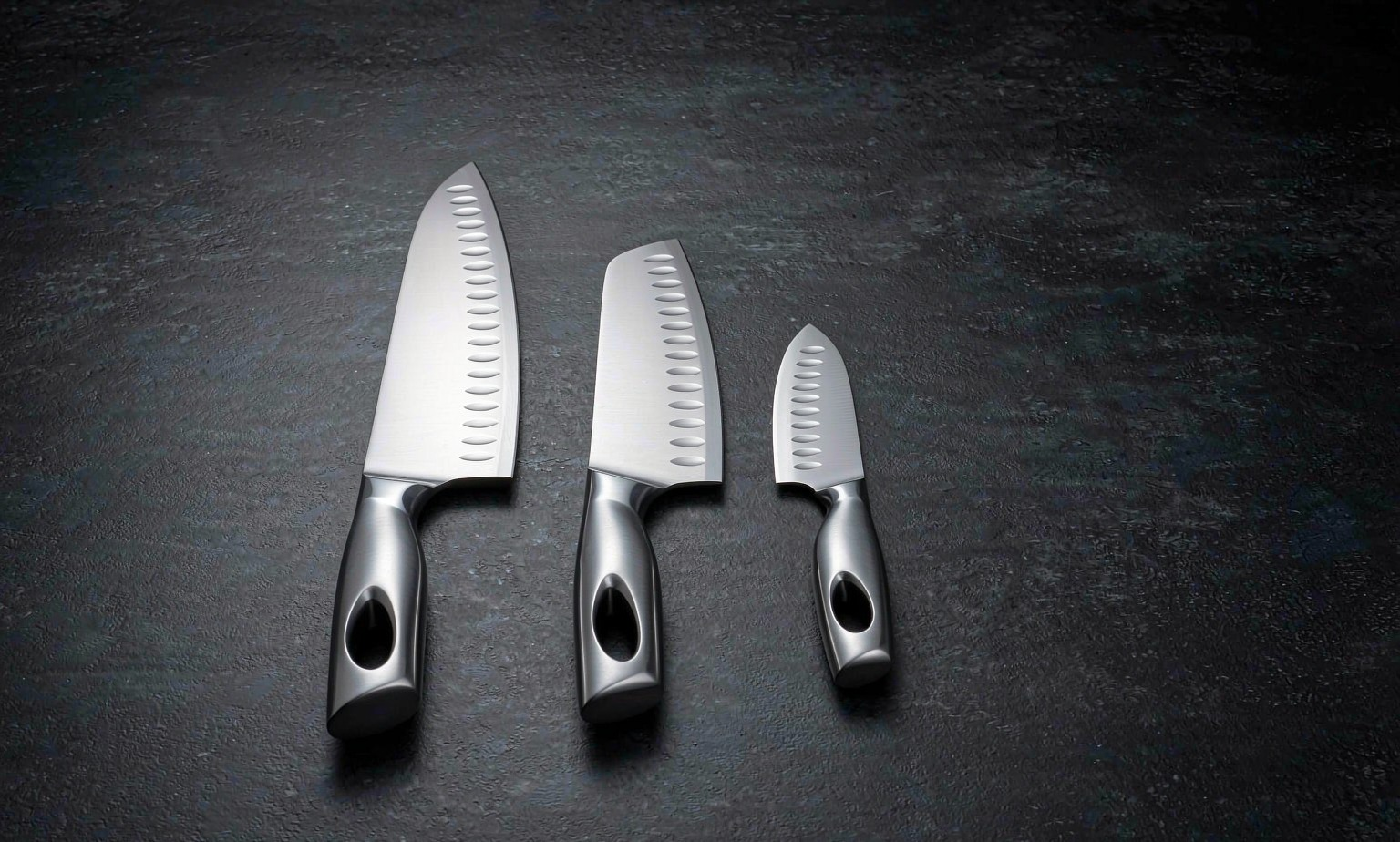
Kitchen Knife Steel Grades: 420J2 vs 5Cr15MoV vs X50CrMoV15 for Commercial Kitchens
Two chef's knives can share the same shape, the same handle, and the same box, and still behave nothing alike in a commercial kitchen. The difference is usually the steel. Across the knife supply chain in Asia, three stainless grades dominate volume production: 420J2, 5Cr15MoV, and X50CrMoV15. They map to three tiers of price and performance, and choosing the wrong tier costs a chain either premature replacement or money spent on hardness its kitchens never use.
This guide compares the three grades by chemistry, hardness, corrosion behavior, and cost — and maps each to the kitchens it actually fits.
The Three Grades at a Glance
The three steels are all martensitic stainless steels: they contain enough chromium to resist corrosion and enough carbon to harden. What separates them is how much of each, and what else is in the melt.
Property | 420J2 | 5Cr15MoV | X50CrMoV15 |
|---|---|---|---|
Carbon (C) | ~0.30–0.38% | ~0.45–0.55% | ~0.45–0.55% |
Chromium (Cr) | ~12–14% | ~14.5–15% | ~14.5–15% |
Key additives | — | Molybdenum + Vanadium | Molybdenum + Vanadium |
Typical hardness | 52–54 HRC | 54–56 HRC | 56–58 HRC |
Edge retention | Basic | Good | Best of the three |
Corrosion resistance | Good | Very good | Very good |
Resharpening ease | Easiest | Moderate | Demands skill |
Relative cost | Lowest | Mid | Highest |
Typical products | Paring knives, household scissors, value lines | Santoku, utility, tailor shears | Forged chef series, premium lines |
X50CrMoV15 is the German-style knife steel: the name encodes roughly 0.5% carbon and 15% chromium, with molybdenum and vanadium refining the carbide structure. 5Cr15MoV is chemically similar at a slightly lower carbon target; it is the workhorse mid-tier steel of Asian knife production. 420J2 is the value steel — less carbon means it hardens to a lower range, which limits edge life but keeps cost and grinding time down.
What Hardness Tier Means on the Line
Hardness is the single best shorthand for how a knife behaves between sharpenings.
A 52–54 HRC blade in 420J2 dulls fastest. In a busy prep station that can mean daily honing and weekly grinding. What it buys is forgiveness: the softer edge rolls rather than chips, takes a fresh edge on a bench stone in two minutes, and tolerates abuse from untrained hands. For a high-turnover operation where knives are consumables, that trade is rational.
A 54–56 HRC blade in 5Cr15MoV holds an edge noticeably longer while staying easy to maintain. Molybdenum and vanadium form fine carbides that resist wear without making the steel brittle. This is the tier most chain kitchens should standardize on: long enough edge life for a full shift, cheap enough to replace entire stations.
A 56–58 HRC blade in X50CrMoV15 holds a working edge the longest of the three and takes a finer apex. The cost is brittleness at the extremes: a thin blade at this hardness will chip if twisted through bone or dropped, and it demands a competent sharpening program. It earns its price in forged chef lines where edge life and premium feel justify the spend.
Corrosion: What "Stainless" Does and Does Not Promise
All three grades carry more than 12% chromium, the threshold where a chromium-oxide passive layer forms. But stainless is a spectrum, not a guarantee.
Chlorides are the enemy. Commercial dishwashing, saline marinades, citrus, and blood all attack the passive layer. Higher carbon in 5Cr15MoV and X50CrMoV15 slightly reduces the chromium available in solution — some of it ties up in carbides — yet the molybdenum in both grades compensates with measurably better pitting resistance than basic 420.
Two practices decide corrosion outcomes more than grade selection:
1. Never run high-carbon knives through a commercial dishwasher. High temperature, alkaline detergent, and long wet dwell attack the edge apex first. It etches, then pits, then fails. Hand wash, dry immediately. 2. Wipe during service. A knife sitting wet between tasks corrodes at the edge within hours — visible as a gray etch line along the apex.
A knife that arrives rust-spotted has almost always been mishandled, not underspecified. But the buyer who specifies 420J2 for a dishwashing-heavy program has specified the failure itself.
The Chemistry Story in One Paragraph Each
420J2 maximizes corrosion resistance per unit of cost. Its moderate carbon caps achievable hardness around 54 HRC. The carbide population is sparse, so wear resistance is modest — but polishability is excellent, which is why it also dominates grooming scissors and mirror-finish lines.
5Cr15MoV adds molybdenum (pitting resistance and secondary hardening) and vanadium (fine grain, carbide formation). The result is the best balance in the group: hardness with toughness, wear resistance with grindability. It is the steel most professional buyers should write into volume specifications.
X50CrMoV15 pushes the same chemistry toward the premium limit. Fine carbide distribution supports a keener, longer-lasting apex at 56–58 HRC without the chipping risk of powdered steels at 60+. It is the steel of the forged chef series: full-tang, full-bolster knives built for stations that cut protein all day.
Matching Grade to Kitchen Type
Kitchen | Recommended grade | Why |
|---|---|---|
Volume fast-casual, central prep | 420J2 for paring/utility, 5Cr15MoV for primary knives | Consumable logic: cheap to replace, fast to sharpen |
Full-service chain dining | 5Cr15MoV across the line | Edge life covers a shift; cost scales across hundreds of units |
Premium dining, hotel signature | X50CrMoV15 forged chef series | Longest edge life, premium feel, worth a real sharpening program |
Central kitchen with in-house grinder | X50CrMoV15 or 5Cr15MoV mix | Professional maintenance justifies harder steel |
A practical chain standard is not one steel — it is a steel ladder. Specify X50CrMoV15 for the chef and santoku knives cooks use all day, 5Cr15MoV for utility and secondary blades, and 420J2 for paring knives and housekeeping scissors that live short lives anyway.
Three Buying Mistakes That Cost Real Money
Mistake one: buying hardness nobody maintains. A 58 HRC knife without a sharpening program becomes a 58 HRC butter knife. If your kitchens lack stones and trained hands, the mid tier serves better than the premium tier.
Mistake two: treating "stainless" as maintenance-free. Every grade above pits in a dishwasher. Care instructions belong in the opening manual, in writing, per SKU.
Mistake three: buying grade labels without verification. Grade names are claims. Ask for hardness test records, not just a number on a quotation — our partner factories sample hardness and edge geometry every two hours in production and ship with 100% visual and function checks under AQL 1.0 audit, but any buyer should verify incoming steel certificates against the melt spec.
How to Verify Grade Claims Before a Rollout
Three checks on samples settle most disputes:
1. Hardness spot test. Five points per blade type — heel, mid, tip — across a batch. A wide spread means poor heat-treatment control, whatever the label says. 2. Spark or spectrograph check against the mill certificate confirms the melt chemistry, catching a 420 blade sold as 5Cr15MoV. 3. Cut-and-count trial. Standardized cutting task — tomatoes, paper, rope — counting cuts to a defined dullness threshold. Run the three grades side by side with your own products.
Record the results against the SKU. The steel ladder only works when every rung is real.
Frequently Asked Questions
Is X50CrMoV15 worth the premium over 5Cr15MoV?
For forged chef lines in premium service, usually yes — the edge lasts longer between professional sharpenings and the feel is noticeably better. For volume stations without maintenance discipline, 5Cr15MoV delivers better value per shift.
Can 420J2 knives survive a commercial kitchen?
Yes, when positioned honestly: paring knives, household scissors, short-life utility lines. The steel is easy to sharpen and corrosion-tolerant. What fails is positioning 420J2 as a primary prep knife.
Which grade is best for dishwashing-heavy operations?
None belong in a dishwasher, but 420J2 and 5Cr15MoV tolerate incidental moisture best thanks to higher effective chromium in solution. Fix the habit first, then choose the grade.
What hardness should I write into a specification?
Name the range, not a single number: 56–58 HRC for the forged chef line, 54–56 for santoku and utility, 52–54 for value lines. Ranges match how heat treatment actually performs and give the factory a process window.
Specifying knives for a multi-market chain? Send your menu, station count, and maintenance reality through our contact page. Our team maps steel grades to kitchen types from our partner factories and arranges cut-test samples before you commit to volume.

