
Oct 27, 2026Chain Operations
Hand Tool Steel and Finish Ladder: Tool Steel, 420 Stainless, and 45# Carbon
Tool steel, 420 stainless and 45# carbon steel form a three-tier material ladder in hand tools. How pliers, drivers and tweezers are graded by steel and finish.
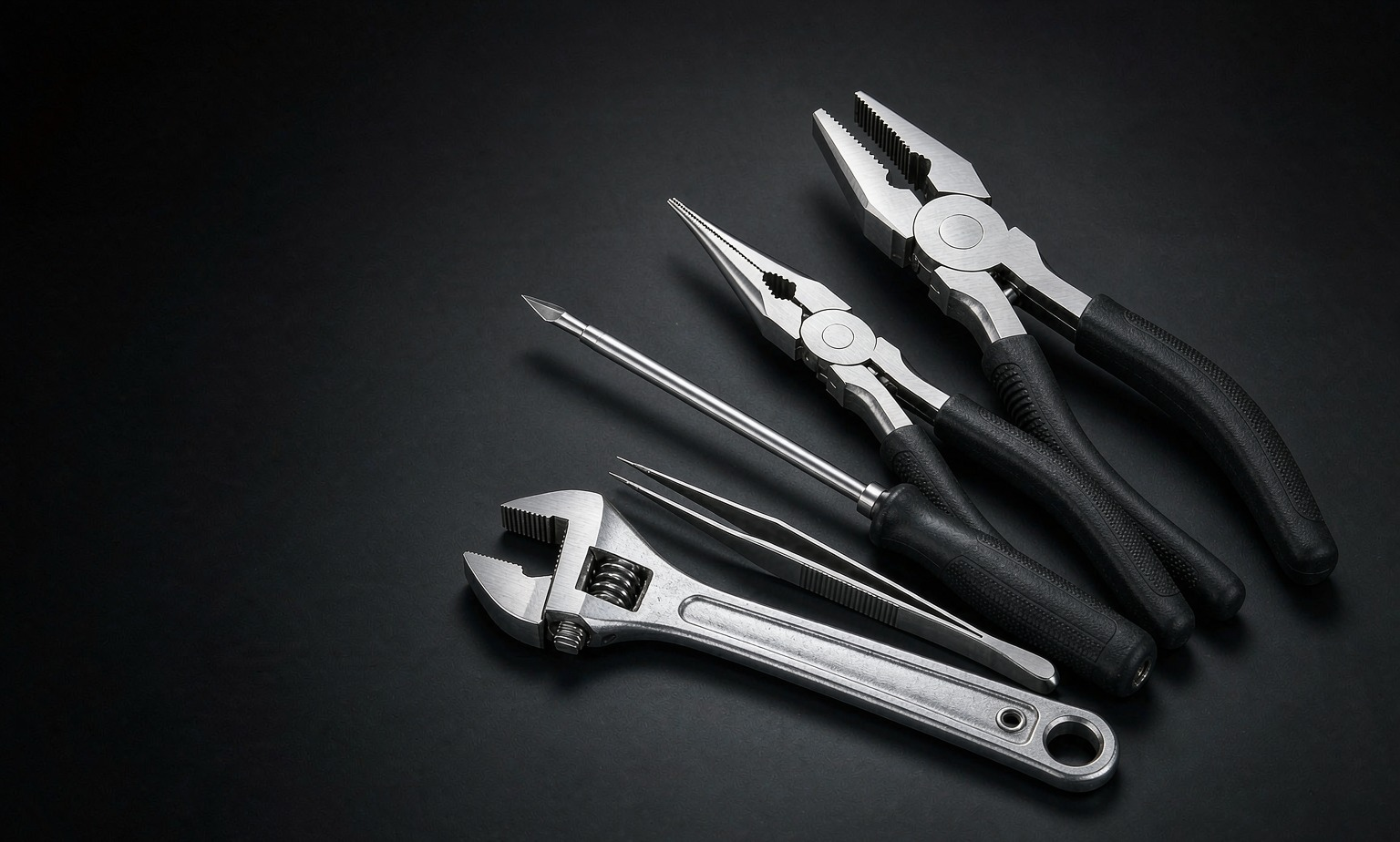
Hand Tool Steel and Finish Ladder: Tool Steel, 420 Stainless, and 45# Carbon
Walk a hardware aisle and the pliers look identical from shelf to shelf. The price differences are not branding — they are a material ladder that most packaging never explains. Across the hand-tool supply chain, three steel tiers dominate volume production: tool steel for the premium tier, 420 stainless for the mid tier, and 45# carbon steel for the value tier. Surface finish — nickel, chrome, satin, or black oxide — grades corrosion resistance and perceived quality on top of the steel decision.
This guide explains what each tier delivers, where each belongs in a retail or professional line, and how finish selection changes both cost and failure modes.
The Three-Tier Material Ladder
Tier | Steel | Typical products | Hardness behavior | Corrosion baseline |
|---|---|---|---|---|
Premium | Tool steel (alloy) | Precision drivers, hex keys, pro pliers | High, tunable through heat treatment | Needs full finish protection |
Mid | 420 stainless | Tweezers, fine tools, grooming instruments | Moderate (52–54 HRC typical) | Good bare; excels with satin finish |
Value | 45# carbon steel, plated | Volume pliers, wrenches, utility lines | Adequate when properly heat-treated | Poor bare — plating is mandatory |
The ladder exists because the three duties conflict. Tool steel takes the hardest, most precise edges and tips but rusts readily. 420 stainless gives up some hardness for corrosion resistance that survives bathroom humidity. 45# carbon steel delivers strength and toughness at the lowest cost, but bare carbon steel rusts in days — its corrosion performance is entirely manufactured by the plating line.
Tier by Tier: What the Buyer Gets
Tool steel (premium tier). Alloy tool steel heat-treats to high hardness with good toughness, which is what a precision driver tip needs to seat a screw a thousand times without cam-out wear. Hex keys and driver bits live here because their failure mode — tip rounding — is controlled by hardening the working end. The cost is corrosion vulnerability and heat-treatment cost; a tool steel product without a real QC program ships hardened and rusting.
420 stainless (mid tier). The same family as mid-tier knife steel, applied where corrosion exposure is constant: tweezers, grooming instruments, kitchen-adjacent tools. It polishes to a clean satin, survives wet environments bare, and machines finely for tips and jaws. The trade is peak hardness — a 420 tweezer tip cannot match tool steel for tip life under torque, but it will still look new after a year of bathroom shelf life.
45# carbon steel, plated (value tier). 45# is a medium-carbon Chinese standard steel — the workhorse of volume pliers and wrenches. Properly heat-treated, its strength and toughness are entirely adequate for controlled-duty tools. Bare, it rusts through a humid warehouse run. Every value-tier tool therefore carries a finish, and the finish quality IS the quality.
Surface Finishes: The Second Ladder
Finish selection grades corrosion resistance, cost, and shelf appeal independently of steel:
Finish | Corrosion protection | Look and feel | Relative cost | Common pairing |
|---|---|---|---|---|
Chrome plating | Strong | Bright, retail-shiny | Moderate | Value-tier pliers, wrenches |
Nickel plating | Good | Warmer, softer shine | Lower-mid | Household lines |
Satin / bead-blast | Good (with sealed surface) | Premium matte, hides wear | Higher | Mid and professional tiers |
Black oxide | Modest | Dark, pro appearance; usually oiled after | Lowest | Tool steel drivers, hex keys |
The mixing rule that governs the market: corrosion resistance and cost are graded by finish. A 45# plier in bright chrome can outlast a badly finished tool-steel product in a humid retail warehouse. Conversely, satin-finished tool steel signals professional tier and prices accordingly. Buyers who specify steel without specifying finish have specified half a product.
Matching the Ladder to Product Lines
Product line | Recommended spec | Why |
|---|---|---|
Precision screwdriver sets | Tool steel tips, black oxide or satin | Tip life under torque; pro perception |
Hex key sets | Tool steel, black oxide | Hardness at working ends; low unit cost finish |
Tweezers and fine tools | 420 stainless, satin | Corrosion + fine tip formation + clean look |
Grooming instruments | 420 stainless, mirror or satin | Wet-environment shelf life |
Volume pliers | 45# carbon, chrome | Strength at cost; finish carries corrosion duty |
Utility wrenches | 45# carbon, chrome or nickel | Same logic; chrome for retail display |
A retail line that mixes tiers deliberately — value pliers next to premium drivers — reads as a coherent brand when the finishes are consistent. The same mix with mismatched finishes reads as random clearance stock.
How Hand Tools Fail, and What to Inspect
Hand tools rarely break in the middle; they fail at the working end or the joint. The predictable failure modes map to specification gaps:
Tip rounding (drivers, hex keys): steel too soft for the duty, or heat treatment shallow. Check hardness at the tip, not the shank.
Jaw spread (pliers): 45# steel under-hardened, or jaw geometry too thin. Measure jaw alignment closed and under load.
Pivot wear (pliers, cutters): joint clearance grows with use; specify rivet or adjustable joint standards and cycle-test.
Rust spotting in the box: finish porosity. Chrome over rough base plating blisters; inspect finish thickness at edges and recesses.
Tip corrosion on stainless tweezers: usually chloride attack from storage environment, not the steel.
Our partner factories check incoming steel coils and handle resins against mill certificates, sample hardness and geometry every two hours on every line, and run 100% visual and function checks before packing under AQL 1.0 lot audits — the same QC spine as the knife program, which matters when a retail line mixes blades and tools under one brand.
Retail and Program Considerations
Tier decisions follow the channel. Professional trade channels justify tool steel and satin finishes; mass retail value packs need 45# chrome at aggressive price points; the mid tier is where most private-label house brands live, because 420 stainless and good nickel work read as quality without premium cost.
Pantone-colored handles start at 1,000 pieces per color; standard handle colors carry no development fee. Packaging tiers — blister, double blister, hanging box — change perceived tier as much as finish does, and retail-ready packaging is available across all three steel tiers.
Frequently Asked Questions
Is 45# carbon steel a quality problem?
No — it is a positioning decision. Properly heat-treated and plated, 45# delivers the strength volume tools need at the cost the channel demands. The failures come from thin plating over poor base finishing, not the steel itself.
Why choose tool steel if it rusts?
Because tip life under torque is the product. A driver bit or hex key that rounds at 200 screws is dead regardless of how pretty it stays. Black oxide plus oiled storage manages the corrosion risk.
What finish should a private label start with?
Nickel-plated 45# for value lines and satin 420 stainless for the mid tier covers most house-brand programs. Chrome reads retail-bright but shows fingerprints; satin reads professional.
How is finish quality inspected?
Finish thickness at edges and recesses, adhesion (tape or bend test), salt-spray hours against the agreed standard, and visual against an approved sample. Finishes fail first at edges — inspect there.
Building a hand-tool line alongside your tableware program? Send your channel, price tier, and product list through our contact page. Our partner factories run all three steel tiers with mill-certificate incoming control and AQL 1.0 lot audits.

