
Chain Operations
Gloss Units Explained: Measuring Shine Objectively
One glaze reads "glossy," another "satin" — and reorders drift between them. Gloss meters, GU values, and how to write a finish tolerance that survives production reality.
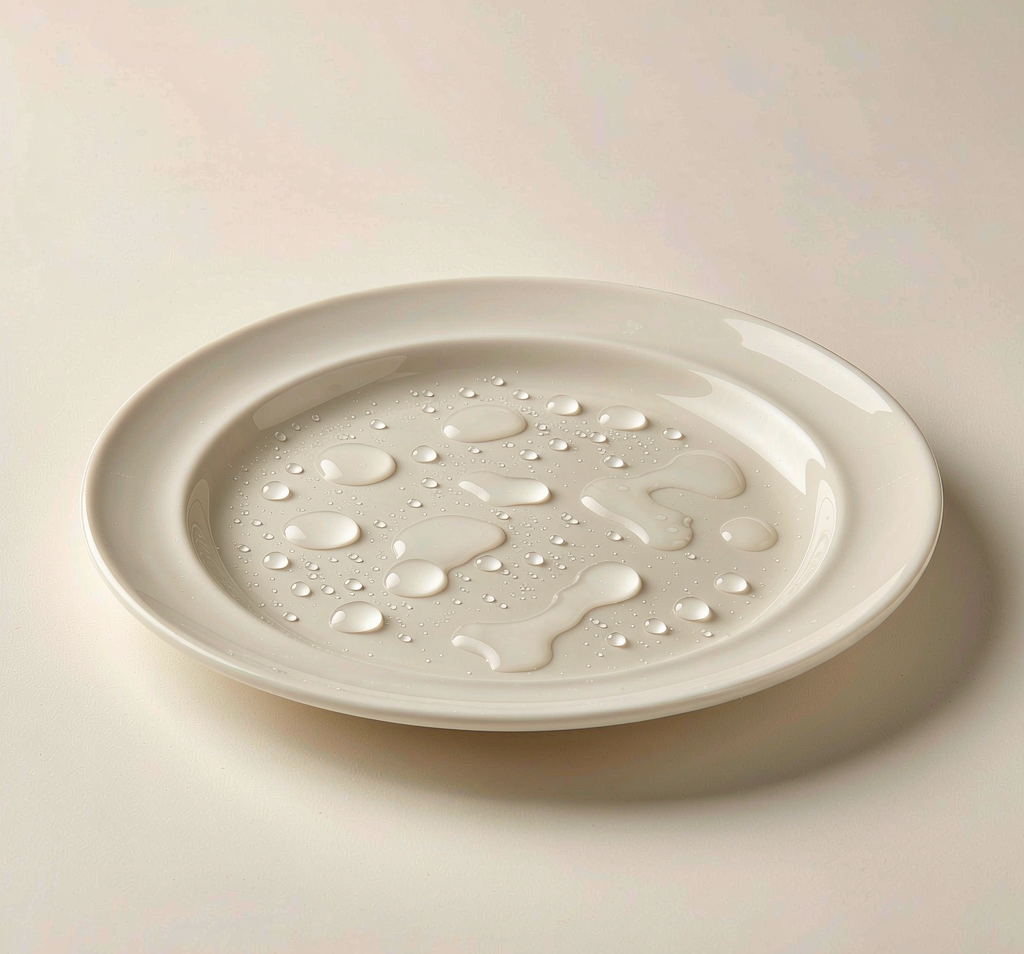
Gloss is the specification hiding inside the word "finish." A glaze approved as glossy arrives on the reorder a few points flatter; a matte body drifts toward satin as a coating batch ages; and because no number ever named the shine, both parties are left describing light with adjectives. Meanwhile the fleet ages visibly out of sync — exactly the drift our color guide describes, running on a second axis nobody measured.
Gloss is measurable. This guide covers the measurement, the numbers, and how finish tolerances are written so that year-five reorders shine like year-one.
What Gloss Units Are
A gloss meter measures specular reflection: light beamed at a surface at a defined angle, and the reflected component read by a detector. The result reports in gloss units (GU) against a black-glass reference standard — higher GU, more mirror-like reflection.
The measurement angle is part of the reading, because surfaces reflect differently at different geometries. The three standard geometries, and where each earns its living:
Geometry | Built for | Typical ranges |
|---|---|---|
60° | The general-purpose reference — most ceramics and finishes report here | Matte <10 GU → high gloss 70+ GU |
20° | High-gloss discrimination — separating the shiny from the very shiny | High-gloss surfaces |
85° | Low-gloss discrimination — separating matte from near-matte | Textured and matte bodies |
The practical takeaway for buyers: a GU number names its geometry or it names nothing — "80 GU" without an angle is a shirt size without a neck.
The Working Ballpark for Tableware
No universal standard assigns gloss bands to our adjectives, but commercial ceramics practice clusters in ranges buyers can anchor on (60° readings):
High-gloss glazes — the brilliant, glassy traditional dinnerware surface: readings typically in the 70–90+ GU band.
Satin and semi-matte glazes — the contemporary restaurant register, light-diffusing but with sheen: roughly the 20–50 GU territory, a wide band that is why "satin" needs a number to mean anything across orders.
Matte and dead-matte bodies — the chalky, fully diffusing surfaces: the sub-10–20 GU zone, where the 85° geometry takes over discrimination.
The bands overlap and boundaries blur — which is the entire point of writing a numeric tolerance. The bands orient; the contract specifies.
Why Gloss Drifts
The same production realities that move color (our kiln guide's catalog) move gloss:
Firing. An under-fired glaze never fully melts and reads flatter than its qualification — gloss drift clustering by kiln position or lot is a firing-discipline signature, visible in the batch records before it is visible in the argument.
Coating and body batches. Glaze raw-material lots shift melt behavior slightly; melamine and polymer finishes shift with coating formulation batches. Each drift is small; unmeasured, they compound across reorder generations.
Wear and chemistry. Service itself polishes or mattes surfaces — the dish-chemistry attacks our dish-room guide describes matts glazes measurably over hundreds of cycles. Programs that measure gloss can actually see the fleet's aging curve; programs that don't, argue about it.
Writing the Finish Tolerance
The specification that survives production has four parts:
1. A target GU reading with geometry — "specimen glaze: 60° geometry, 75 ±3 GU" — the tolerance sized to the process's honest capability (the factory's own batch data says what ± is real).
2. The reference pairing — the sealed physical reference (our color guide's master system) carrying the approved finish, with the instrument as the arbiter between candidates and reference.
3. Where measured — gloss varies across a piece (rim, well, foot); the tolerance names its measurement zone(s), the way dimensional specs name their gauge points.
4. The instrument discipline — calibrated meter, defined geometry, logged readings per batch: the batch-tie that makes finish drift traceable, exactly as color's ΔE log runs.
Practical Program Notes
Measure new pieces at receiving — the five-second gloss reading joins the color comparison at the dock: drift caught at the carton never becomes the table's story.
Measure service pieces on the audit — a quarterly gloss reading on sampled in-service pieces (the audit SOP's route) plots the fleet's aging curve against the end-of-life reference, replacing retirement-by-complaint with retirement-by-trend.
Pairs with color, always — finish and color interact in perception (our finish-guide note on gloss shifting perceived color); programs that specify both numbers, from the same reference pieces, close the loop the eye cannot.
Frequently Asked Questions
Do I need a gloss meter for a small program? The sealed references and a disciplined eye hold small programs; the meter earns its cost the first time two honest parties disagree, or at the first reorder — both arrive early in every program's life.
Can gloss be too high? For service, yes: very high gloss shows every scratch and water mark — the mirror-finish trade-offs our flatware finish guide covers apply to ceramics. High gloss is a maintenance contract, not just an aesthetic.
Why do matte finishes vary so much batch to batch? Matte surfaces sit at the edge of glaze melting behavior — the flat end of the process window — so normal firing variation moves matte readings proportionally more. Matte programs tighten batch gloss logging accordingly.
Does gloss affect cleanability? Gloss correlates with the soil-release behavior of a surface — our dish-chemistry guide's matting cascade. Not a food-safety cliff, but a service-appearance slope the program can now measure.
What is the single gloss clause that prevents disputes? Target GU with geometry, tolerance band, measurement zone, per-batch logged — one sentence, appended to the color clause, backed by the sealed reference. Shine, argued in numbers, stops being an argument.