
Chain Operations
First Article Inspection: The Checklist That Saves Programs
Before mass production, one sample of everything gets measured, weighed, tested and signed. The first article review is where programs are actually won — the checklist that makes it routine.
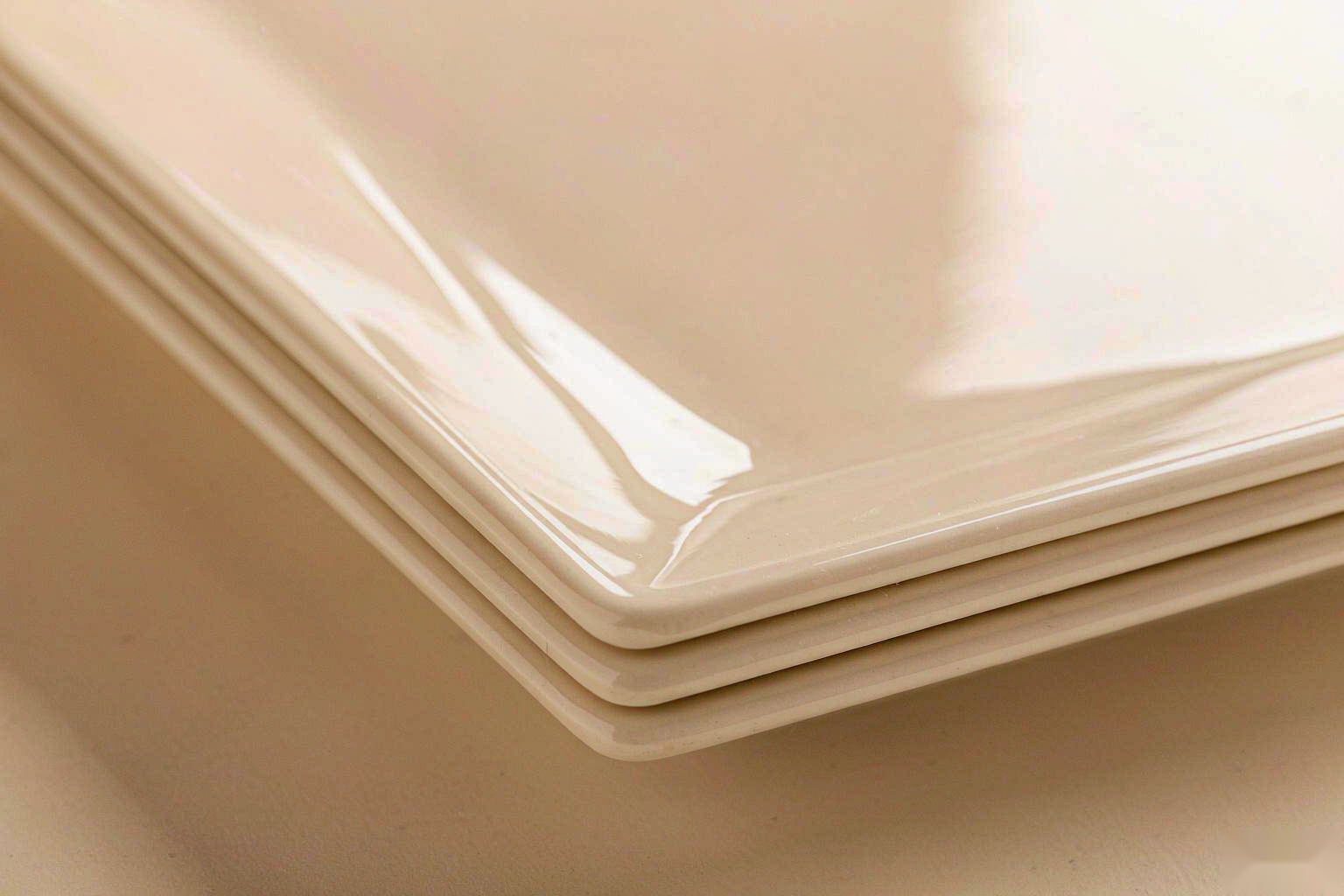
Every tableware program has one moment where a correction costs days and every later moment where the same correction costs seasons: the first article. One sample of every piece — measured, weighed, compared, washed, dropped, signed — before the factory commits the production run. Programs that skip the first article meet their specification disputes inside a finished container; programs that run it meet them on a bench, where they are still cheap.
The first article inspection (FAI) is a discipline, not an event. This guide is the checklist — what gets checked, in what order, and how the approval becomes the contract it should be.
The Stakes, Concretely
A rim profile that arrived 0.8 mm off spec; a glaze a half-tone warm against the sealed reference; a footring that rocks on the flat table — each is invisible in a photograph, each takes one bench minute to catch at FAI, and each costs a fleet's worth of consequences if it sails. The first article exists because samples and catalogs communicate design, while the FAI communicates production: not "can the factory make this piece" but "did they make this piece, exactly, and can they keep making it."
The Checklist, in Order
Identity and documentation.
SKU, body code, glaze code, decoration codes match the specification sheet
The test-report file's header matches (our test-report guide's reconciliation)
The production lot plan: which kilns, which batches, the traceability the firing-record discipline expects
Dimensions.
Overall diameter/length/width per spec, caliper-verified at multiple orientations (out-of-round is a dimension too)
Height, and stack height per dozen (the rack and shelf economics our storage guide counts)
Gauge at specified points: plate rims, flatware necks (the gauge minimums our flatware guide defines)
Fit and interface.
Rim-to-lid compatibility on lidded formats; stack seating (the rim-and-footring pairing from our rim guide)
The ladle and utensil interfaces (the donburi lesson: nobody specs the interface, everybody pays it)
Rack fit for the wash path, holder fit for the pass
Finish and color.
Glaze color against the sealed reference under standard light (the color program's comparison)
Finish quality: rims, feet, mold lines — the finger-and-raking-light pass
Decoration: logo position, size, application quality against the approved art
Weight and balance.
Piece weight against spec (the weight program's column); balance on formats where it matters (bowls, the knife program's balance point)
Function tests.
The wobble test (footring), the slide test (stack), the ring test (body soundness)
Thermal: hot-fill and thermal-shock sample behavior on heat-service formats
The wash-cycle trial: samples through the actual dish cycle — the chemistry reality our dish-room guide describes — checked against finish expectations
The paper.
Everything above recorded, both parties signing the retained sample into its role: the FAI piece becomes the physical reference the production lots answer to (alongside the sealed color standards) — the acceptance anchor the AQL inspection (our sampling guide) later enforces.
The Three Disciplines That Make FAI Bite
Measure, don't admire. The FAI bench has calipers, a scale, a light standard, and a flat plate of glass — instruments, not opinions. "Looks good" is not a first-article result; a number against a tolerance is.
The retained sample chain. The approved FAI pieces, sealed and held centrally, are the program's physical contract — production's drift is measured against them (with the color references) at every inspection and receiving. The chain from FAI bench to receiving dock is what makes the approval durable.
The change log. When FAI finds the 0.8 mm and the parties agree the correction, the correction enters the specification sheet and the new FAI re-runs. Programs drift silently when corrections live in emails; the sheet is the single source, versioned like our brand-kit guide's process.
Scheduling: When FAI Actually Happens
The FAI's placement in the timeline is half its value:
After tooling and glaze development, before the production run commits — the classic placement: the run waits for the bench.
At any process change: new kiln, new glaze batch source, body modification — the change resets production, and the FAI re-confirms it (our kiln guide's change logic).
At the pre-production sample stage for reorders of custom pieces: the batch discipline runs smaller, but the principle holds — the piece that answers to the reference is the piece that ships.
Frequently Asked Questions
FAI versus pre-shipment inspection — do we need both? They answer different questions: FAI confirms the production setup makes the piece right; the shipment inspection (the AQL method) confirms the run stayed right. Skipping FAI inspects quality into goods; skipping the inspection trusts process blindly. Programs that run both run calm.
Who approves the FAI — engineering or operations? Both sign: engineering on dimensions and tolerances, operations on fit (racks, ladles, wash trial) and the references. The dual signature is the checklist's enforcement.
How long does a real FAI take? A bench day per SKU family — the checklist, measured, with the wash trial's cycle time the long pole. The cheapest day in the program's calendar.
What if the factory resists FAI? Serious factories run their own FAI internally — resistance signals either a process that cannot yet hold the spec or a trading company without production access. Both findings are the FAI working.
One sample or several? A measured sample set (three to five per piece) — single pieces cannot show process variance, and variance is exactly what FAI exists to see.