
Oct 29, 2026Chain Operations
Marine and Cruise Tableware: Corrosion, Roll and 24-Hour Service
A ship runs restaurant service for weeks between resupplies, in rolling seas. The corrosion specs, non-slip contracts and cubic-decimeter stacking that marine ware demands.
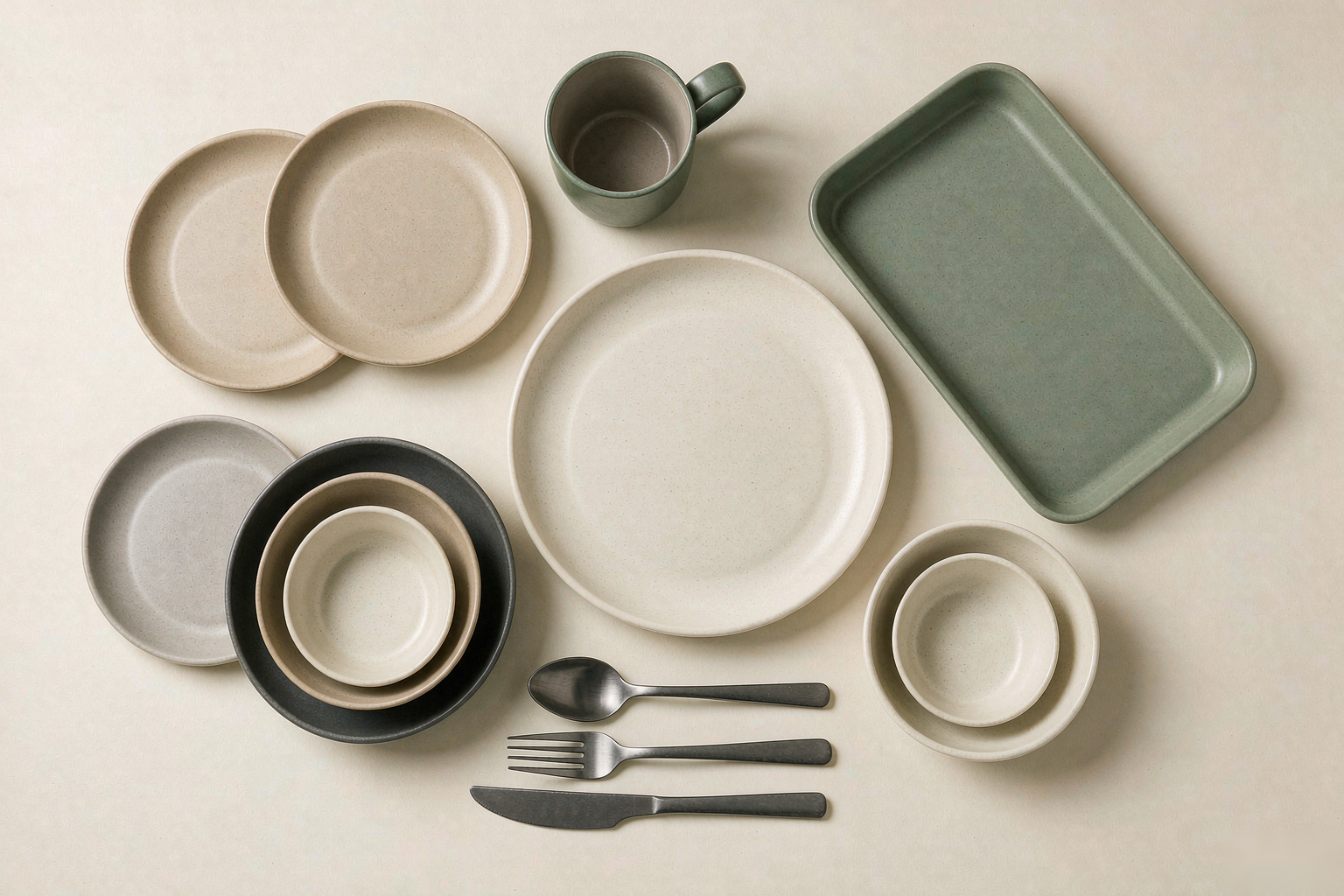
A cruise ship is a city of restaurants that sails away from its supply chain. Tableware runs twenty-four hours across buffets, specialty venues, crew mess and room service; it stores in lockers sized by the cubic decimeter; it rides a moving floor; and when something breaks two days out to sea, there is no same-day courier. Marine tableware is restaurant ware engineered for a moving, salted, self-contained world.
Twenty-Four Hours of Service
Shipboard food service never closes: breakfast waves, all-day buffets, lunch seatings, dinner seatings, late-room service, the crew mess running on its own cycle. The fleet implications:
Wash cycles run continuously — the dish operation is a factory with shifts, and ware must survive a cycle count that land-based restaurants never approach.
Fleets carry depth by design — with no resupply, the buffer is not a convenience but the system's spine. The fleet math adds a voyage-length factor: pieces in circulation sized so the last dinner of the voyage runs as fully stocked as the first.
Multi-venue sharing — the same plate families serve the buffet at noon and the dining room at night; fleet families that cross venues multiply their value.
Roll and the Non-Slip Contract
The ship rolls, and the table must hold. The specs that answer:
Non-slip bases on plates and bowls — rubberized or textured feet that grip the tablecloth through a swell.
Edge heights chosen for the roll: buffet vessels with higher walls, plates with guarded rims, cups that keep liquid in a pitch.
Table systems — mats and cloths that lock the setting down; the ware's grip only works with the table's.
The honest test is motion, not static: a loaded table tilted and rocked at sampling. Ware that passes a level-table test fails the contract the first afternoon at sea.
Salt Air and Corrosion
Salt air attacks everything metal, and marine service finds every weak alloy. The material specs:
Marine-grade stainless for cutlery, serving tools, and any metal that lives in the open air — the grade matters more at sea than ashore.
Hardware scrutiny — rivets, hinges on bread boxes, lid fittings: the first corrosion shows at joints, not on faces.
Rinse and dry discipline — salt residue plus damp storage is the corrosion recipe; the closing routine washes salt off everything, every night.
Ceramic and glass ignore salt but obey the roll and the shock — and aboard, thermal shock rules are stricter because the dish machine runs hotter and longer than any restaurant's.
Stacking by the Cubic Decimeter
Ship storage is submarine storage: every locker counted, every shelf claimed. Ware must stack to structural density — nest depth per decimeter is a headline spec, not a footnote. The buy test is the locker itself: mock the actual shelf dimensions, stack the fleet, count the meals one locker feeds. Cups that nest deeper buy voyage days; bowls that bridge waste air the kitchen does not have.
Breakage in storage matters too: stacks locked by matched feet survive the roll; stacks that shift in a locker chip themselves without ever meeting a guest.
Water Discipline
Ships make their own fresh water, and the dish operation is one of its biggest consumers. Ware choices ripple into water economics: pieces that wash clean in one pass (hard glazes, film-releasing surfaces) save water twice per cycle, and ware that survives high-temperature machines without etching keeps its surfaces releasing well for years. The glaze contract aboard is the same as any acid-heavy menu — but the wash is harder, so the glaze must be harder still.
Neutral Tables for International Guests
A ship's dining room serves a dozen nationalities in one seating. Tableware carries the neutrality: plating formats that read across cultures, cutlery sets that cover the full toolkit (guests use what their habits demand), and portion vessels that make no assumptions. The register is international-premium — consistent, calm, spotless — and the fleet's consistency across venues is what makes the ship feel like one hotel rather than ten restaurants sharing a hull.
Redundancy When Resupply Is Far
Two days from port, a dropped tray is a real loss. Marine fleets carry redundancy as doctrine: breakage factors set well above land-based rates, spare ratios for register pieces that cannot be substituted, and a breakage log that drives the next port's resupply list. The discipline that makes redundancy affordable is standardization — one plate family across venues means one spare pool covers everything.
The Crew Mess and Back-of-House Fleets
Ships run a second restaurant nobody markets: the crew mess, feeding thousands of crew on their own schedule. Its fleet is deliberately different — denser materials, simpler formats, higher turnover — and its ware economics matter because crew fleets are the first place budgets get trimmed. The discipline that pays: the crew mess gets the same spec rigor as guest venues (wash-tested materials, real pars), because a crew eating off failing ware on a six-month contract is a morale and retention line item, not a tableware footnote.
Frequently Asked Questions
What makes marine ware different from restaurant ware? Three contracts at once: it must hold on a rolling table, survive salt air, and stack to locker density. Any one of the three can be engineered alone; the format demands all three.
How do fleets handle no resupply? Voyage-length buffers as doctrine, high breakage factors, and standardization so one spare pool serves every venue. The last dinner of the voyage should stock like the first.
Which failures show up first at sea? Corrosion at joints — rivets, hinges, fittings — and glaze etching from hard, hot wash cycles. Both are specified against: marine-grade hardware and hard-fired, film-releasing glazes.
How is the non-slip contract tested? In motion. A loaded table tilted and rocked at sampling — static-table tests say nothing about the afternoon swell.
Why is stacking so extreme aboard? Storage is counted by the cubic decimeter and contested by every department. Nest depth per locker is a headline spec: deeper nests buy voyage days and menu capacity.

