
Oct 27, 2026Chain Operations
Pliers for Retail and Trade: Jaw Geometry, Joint Design, and the Steel Ladder
Pliers fail at jaws and joints, not in the middle. How jaw geometry, pivot design and the 45# carbon steel ladder decide which pliers come back for reorders.
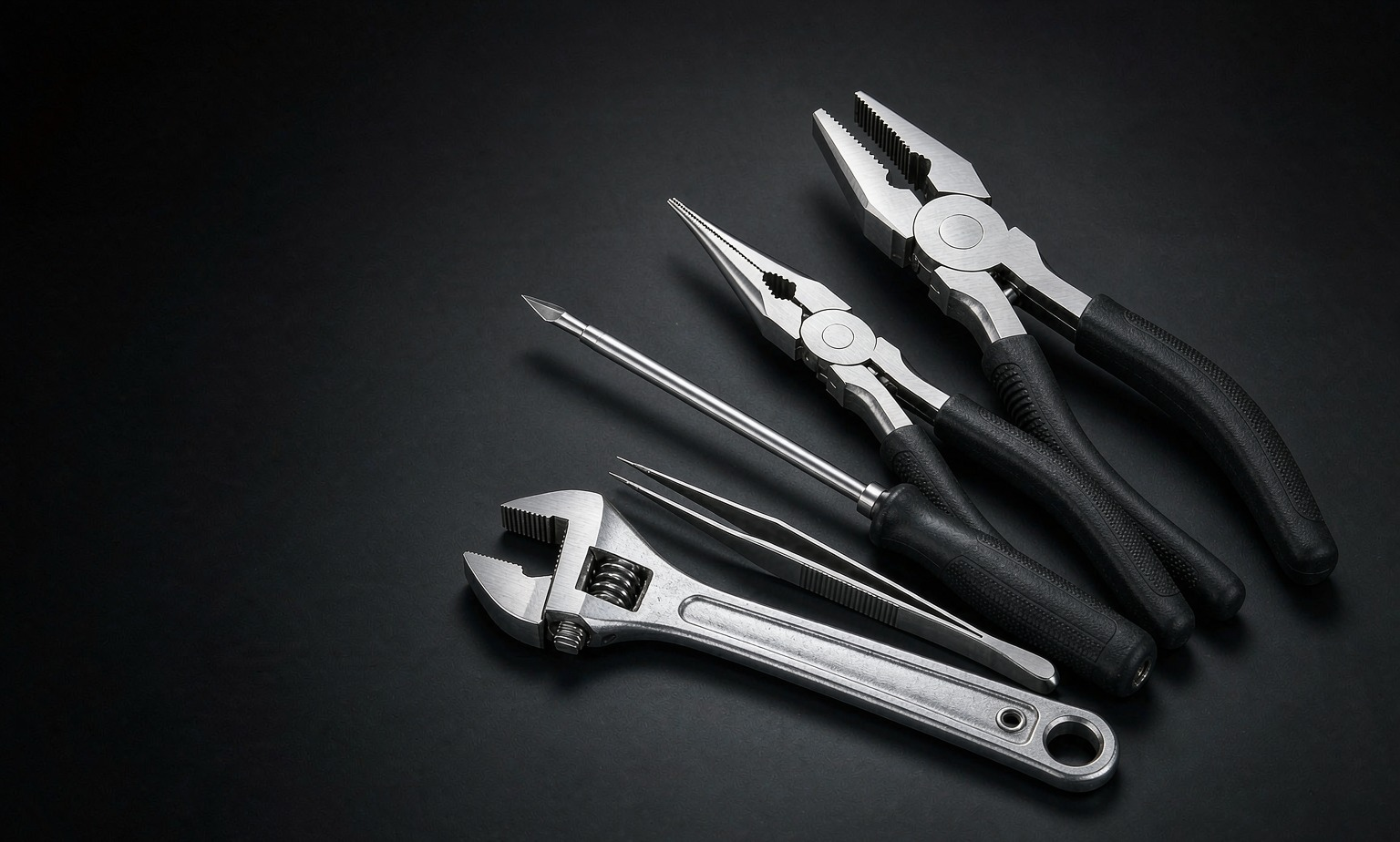
Pliers for Retail and Trade: Jaw Geometry, Joint Design, and the Steel Ladder
Pliers are the volume anchor of every hardware line — and the category where specification discipline separates brands that get reorders from brands that get returns. A plier never fails in the handle; it fails at the jaw (teeth rounding, tip spreading) or the joint (pivot wear, play). Both are manufacturing decisions made long before the tool reaches a shelf.
This guide covers the jaw geometry that does the work, the joint designs that hold up, and how the steel-and-finish ladder maps to retail and trade channels.
The Jaw Does the Work: Geometry by Plier Type
Jaw shape is the product definition. What each family demands:
Plier | Jaw priority | Failure when wrong |
|---|---|---|
Combination (lineman's) | Serrated grip zone + cutter hardness | Slipping on round stock; cutter chipping |
Long nose | Tip alignment under load | Tips spread — the classic return |
Diagonal cutters | Cutting-edge hardness and alignment | Edge roll; nicks from hard wire |
Water pump (channel) | Tongue-and-groove engagement | Slip under torque; adjustment jump |
End cutting (nippers) | Flush edge meeting | Burred or gapped cut |
The check that separates good factories: close the plier and hold it to light. Light leaking through the jaw contact line means misalignment — the plier will slip on round stock and crush instead of grip. On cutters, the edges should meet flush with visible overlap on the pull side, set by the factory so the cut shears rather than pinches.
Joint Design: Where Play Is Born
The pivot is the plier's heart. Two constructions dominate:
Fixed rivet joint — pressed and peened at the factory. Cheap and compact; when the peen wears, play develops and never tightens. Quality signal: the rivet head should be uniform and centered, with zero handle wiggle when new.
Adjustable joint (screw + nut) — user-serviceable play adjustment. Costs more, lasts longer in trade channels where tools work daily.
Play develops faster when the joint faces are soft. Our steel ladder matters here: 45# carbon steel properly heat-treated holds joint faces for trade use at value pricing; under-treated 45# develops wobble within months — the joint is where a factory's heat-treatment discipline shows first.
The Steel-and-Finish Ladder for Pliers
Tier | Steel | Finish | Channel |
|---|---|---|---|
Value | 45# carbon | Chrome or nickel plate | Volume retail |
Mid | 45# carbon, better heat treatment | Chrome, satin options | House brands |
Professional | Alloy/tool steel elements | Satin, black oxide | Trade channels |
The mixing rule from our catalog applies directly: corrosion resistance and cost are graded by finish. A 45# plier in bright chrome outlasts a badly finished premium-steel tool in a humid warehouse. Finish thickness at edges and recesses — where plating runs thin — is the inspection point that predicts rust-in-the-box complaints.
Handle Systems: Insulation, Grip, and Compliance
Handles are a specification, not decoration:
Dipped (PVC) grips — volume standard; check dip thickness and tip coverage
TPR overmold — better wet grip, higher perceived tier; check bond between overmold and base
Two-color insulation rated to 1000V — a certified VDE category for electrician lines, tested per batch with dielectric checks; do not mix "insulated-look" handles with rated insulation in a trade catalog
Handle color is also a merchandising system: brand colors on TPR overmold start at 1,000 pieces per color with Pantone matching.
Acceptance Tests for a Plier Program
Test | Method | Reject if |
|---|---|---|
Jaw contact | Close and backlight | Light through contact line |
Grip test | Serrated jaw on round stock under load | Slip or tooth flattening |
Cutter test | Cut defined hard wire, inspect edge | Edge roll, nicks, or gap |
Joint cycle | 1,000 open-close cycles | New play or wobble |
Handle pull | Pull grip away from body | Movement or peel |
Finish | Salt spray hours + edge inspection | Rust in box; thin plating at recesses |
The 1,000-cycle joint test predicts field life better than any static check — joint play is the complaint that arrives at month three and never stops.
Channel Mapping
Value-tier chrome-plated 45# pliers anchor mass retail multi-packs. House brands live in the mid tier with satin finishes and branded handle colors. Trade channels justify alloy steels and adjustable joints — and they audit: electricians check VDE certificates, and industrial buyers read the joint construction before the price.
Frequently Asked Questions
Why do cheap pliers develop play so fast?
Joint face softness. Under-treated 45# steel wears at the pivot faces under load cycles. The heat-treatment depth at the joint — not the overall steel grade — decides how long the plier stays tight.
Are insulated-look handles safe for electrical work?
Only pliers certified and batch-tested to the rated voltage (VDE 1000V category) belong in electrical work. Looks are not certification; ask for the test records per batch.
What should I inspect on samples?
Backlit jaw contact, cutter edge meet, joint play after 1,000 cycles, handle bond, and plating thickness at edges and recesses. Record by sample — these five catch the returns.
What are the MOQ and lead times?
Value-tier pliers start at standard hardware MOQs; 15–25 working days after sample approval; 30/70 T/T. Pantone handle colors from 1,000 pieces per color.
Building a plier line for retail or trade? Send your channel tier and product list through our contact page. Our partner factories run 45# carbon and alloy tiers with joint-cycle testing and salt-spray finish checks in the program.

